Prattle & Jaw

Two blogs about a whole lot of nothing

B2B is B2C and B2C is B2B.

So, I’m going to do what my girlfriend tells me to do and write my ramblings here instead of (or as well as) on LinkedIn. LinkedIn is currently the only social network (if it actually counts as that) I really use (bar sporadic Instagram stories. Or reels, I’m not even sure), so when I tend to see/read/hear something, my default is to post it on LinkedIn, where it is instantly devoured by the algorithm and lost forever. Here, it is arguably more permanent. For the benefit of, well, me.

Anyway! I digress.

Jessica Jensen, CMO of LinkedIn, was a guest on Uncensored CMO recently, and the episode is an excellent one. They cover everything from B2B marketing to the LinkedIn algorithm, and personal brand building to people management. But what I wanted to ramble about was one of the first points in the conversation, which is the difference between B2C and B2B marketing.

Or, as Jessica puts it, B2P – business to people. That one is new to me, but I like it very much. I don’t know how long I, and many others, have been saying it, but you are not marketing to a company. There is a human on the receiving end. A living, breathing human who is full of emotions, just like you.

The kinds of ads that resonate with them are the same kind of ads that resonate with “A Consumer™” who is buying a new pair of jeans, headphones or TV. As Jessica puts it, “B2P buying decisions are made on a fusion of rational and emotional factors, no matter if you're buying a car, a bag of Doritos or a SaaS product.”

Or, as Bruno Bertini, CMO at 8x8, says;

“Look at B2C CMOs: they live in constant dialogue with their customers. Every tweet, review or TikTok is unfiltered feedback. They have to earn attention by sparking emotion, not just listing features. They know buyers want to feel something. B2B isn’t different. The CIO scrolling LinkedIn at lunch is the same person scrolling Instagram at night. If they expect connection, creativity and authenticity as consumers, why would they settle for less at work?”

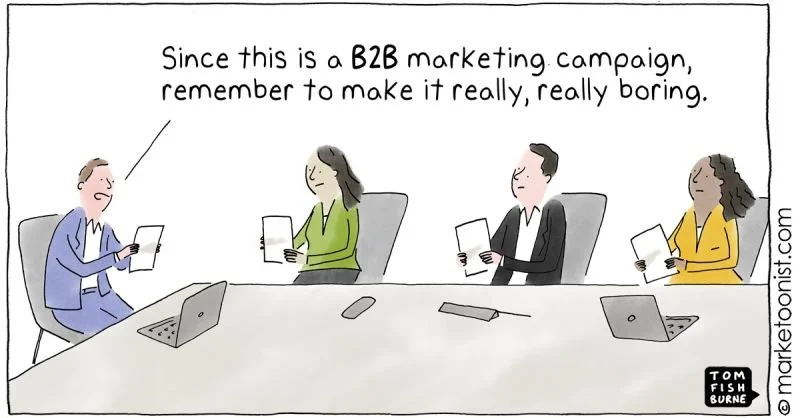
I love that more and more people are realising that emotions can be used in B2B advertising as much as they can be used in B2C. I’m loath to use those terms, as they’re essentially redundant. At least when we’re talking about raising awareness. Take a step or two down the funnel, and then you’re talking about product marketing. Which, unfortunately, is what most of “B2B marketing” has been, until recently. We all know that 95% of buyers aren’t in the market right now, so why do we continue blasting feature-heavy ads?

“Spots of product info is not how you nurture buyers.”

Amen, Jessica. Amen.

I wish I could remember who, but someone interviewed again on Uncensored CMO, suggested that it’s arguably more emotional to buy a solution or product for a business (B2B) than it is to buy something for yourself (B2C); it’s more expensive, your decision impacts more people, and you are responsible for it. I’m not sure I fully believe this, but it’s not wrong, either. It stuck in my mind, so it obviously struck something in me.

The point, and I do have one, is that advertising must be emotional. No matter if you’ve been placed in the B2B or B2C box. And if you’re in the B2B box, your advertising should not be “user, need, value prop, some product specs and performance data”.

“We forgot something important: Buyers—whether they’re singular humans or teams of decision makers—are still people. Nobody falls in love with a feature list. They fall in love with a story. They fall in love with trust. They fall in love with how a brand makes them feel (and of course delivers). They may be wowed by new features or bells and whistles, but a software update won’t make their soul sing. And we, as humans, want our souls to sing.”

There is a wealth of research out there that proves how emotional advertising works. It doesn’t matter which box you’re in; you’re targeting a human.

Get to know them. Understand them. Find out what annoys them, what frustrates them, and what they wish they had. Then create something that they recognise. And, ideally, make them laugh.

Then keep doing it. And keep doing it. Compound that shit. So that when they are in the market to buy, you’re top of mind.

New shoes?

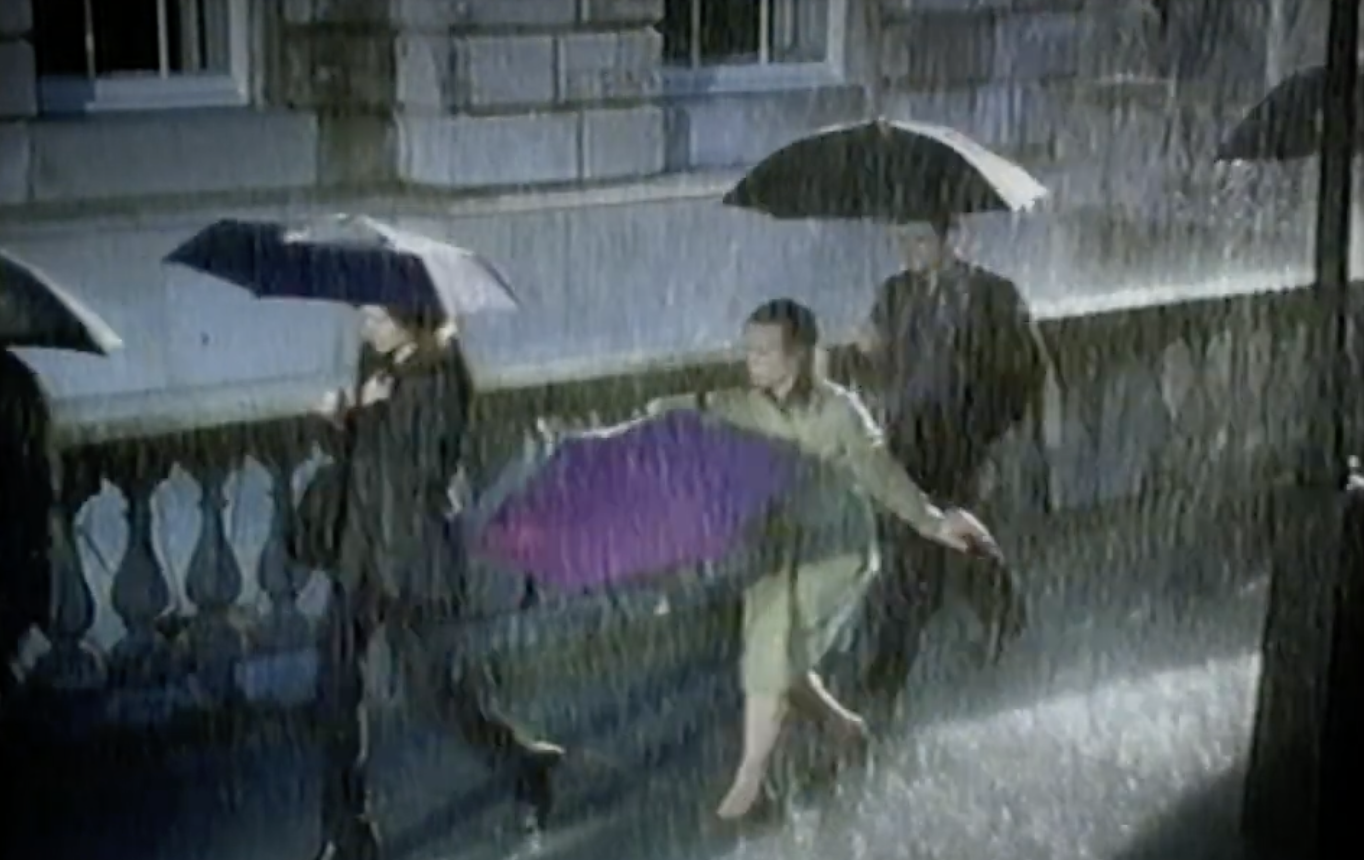
Some of my favourite adverts that pop into my head whenever I think about great ads, or buy new shoes, are those by Clarks.

Unfortunately, I can’t find my favourite anywhere. There is a chance I’ve made it up, but judging from all the other Clarks ads from around the same ear, I don’t think I did, as it’s very much in line with the overall direction.

The one I remember is – and bear with me as it’s a little hazy – a TV ad where we see someone admiring their new shoes in the reflection of a window. We see it from the owners PoV, and they’re doing that thing where you twist your foot so you can see the side of the shoe, and so on. I think they’re at a cafe, but they’re definitely outside. In the reflection, we also see some chaos unfold behind the shoe owner. Possibly an explosion, sirens – the kind of thing you’d immediately turn around to look at. But the owner doesn’t because they’re so preoccupied with their new shoes.

Genius.

I have searched and searched for this particular advert, but no dice. Instead, I found some others I fondly remember, just not quite as fondly.

Anyway, they’re all brilliant pieces of advertising that tap into such a basic feeling: the joy of new shoes.

Here they are for your viewing pleasure. If anyone has any others, please let me know.

Does advertising need a moral revolution?

Hello and welcome to another massive brain dump of thoughts for which I wish I had more time and a bigger brain, but hey, I’ll work with what I’ve got. Consider yourself warned.

Here we go. 

This is a result of listening to the superb Reith Lectures with Rutger Bregman, episode 132 of the always excellent Uncensored CMO podcast, and reading this great but depressing Creative Review article, Anger management: Why brands are feeding our rage addiction

“The general consensus in the marketing community was that sex sells. Then we discovered something better, and that is rage.”

That’s a bit of an abridged quote by Scott Galloway taken from the podcast mentioned above. It was one of those quotes that really stuck with me, and not in a good way.  The whole episode is great, but I think about this bit quite often, sadly.

I mean, just scroll for one minute, and you’ll see it: rage-bait headlines, brands being all controversial for the kicks, individual creators manufacturing anger because anger gets them clicks (sidenote: Read this great piece by Nick Asbury about manufactured dissent)

Creative Review nails it by calling this delightful season, “the age of rage”, which is so accurate and depressing I can’t even.

The 2025 Gallup Global Emotions Report says anger, sadness, worry and stress are all higher than they were a decade ago, with 22% of us feeling angry on any given day. Which sadly doesn’t come as a surprise. Pissed-off people might actually be the biggest demographic on the planet right now, and, honestly, it would be amazing if marketing didn’t lean into that. 

But does rage actually sell – or does it just get engagement?

Engagement and sales are not the same thing. No surprises there. Attention is not loyalty, and momentary views are not the same thing as long-term brand building. I feel like we need to say this louder for the people in the back, as they say. 

There’s no doubt rage works in the short term. We can’t look away from it, and really, we can’t avoid it. Platforms reward it, and algorithms amplify it.

“Every single video of mine that has gained millions of views is because of hate comments.”

Lord, give me strength. 

It, depressingly, makes sense if your business model is impressions and ad revenue (you know, if you turn off your moral compass). But brands don’t – or at least shouldn’t – live or die by short-term metrics. Brands are built over years. So, what does living permanently in a state of outrage do to memory, trust, and emotional recall?

This is where Orlando Wood, Andrew Tindall and everyone else at System1 come in. 

Much of their work keeps returning to the same truth: emotion is central to effectiveness, but the whole emotional journey matters. Negative emotions, like anger, fear, and disgust, can absolutely grab attention, but they’ll only work if they’re part of a story that ends positively.  You know, it’s all in the payoff. I know it’s an old one, but this is the ad that came to my mind.


You can evoke sadness, fear, even anger – especially in cause-led work – but if you want long-term effectiveness, those emotions need to be resolved. Otherwise, people remember the tension, not the brand.

Which is basically Darren Savage’s point in the Creative Review article:

“The most effective long-term advertising ideas work because they offer people the means to resolve a psychological need and present them with the vision of a positive outcome … Outrage offers no solutions, no resolution, no benefits. It just makes you mad – for a bit.”

So maybe the issue isn’t anger itself. Maybe it’s that rage is a powerful opener and a terrible ending.

And yet outrage is sooooo tempting. Mark Shanley at adam&eve argues that deliberately courting controversy can reap rewards, earned media alone can be worth the risk, but only if you truly believe in what you’re saying and have the stomach to absorb backlash. Most brands don’t. They want to be talked about, but they generally want to be loved, not hated, oddly enough. 


The examples used in Creative Review make an important distinction. American Eagle was prepared to ride out the backlash they faced, and the share price jumped. e.l.f. did not, and paid the price when its campaign clashed with its audience’s expectations.

Outrage isn’t a magical universal lever all brands can pull at will. It may generate attention in the short term, but whether it builds or erodes value depends on alignment, intent, and what happens after the noise fades.

Tamryn Kerr puts it very nicely:

“Rage may buy you clicks today, but it bankrupts trust tomorrow – a sugar rush of attention that fades, while enduring brands are built on trust and loyalty.”

And this is where I’m going to shoehorn Rutger Bregman’s Reith Lectures from the BBC in. So get ready. If you haven’t listened to them, I suggest you do, because they are oh-so good. Also, make sure you stick around for the Q&A.

So, Bregman is basically arguing that our whole civilisation is currently optimised for the wrong emotions.

He describes an elite ecosystem that rewards shamelessness – the “survival of the shameless.” Politics becomes performance (hello, The White House’s Instagram), and institutions all declare a higher purpose, i.e. “truth”, while directing young talent into what he calls “BS jobs” – doing work that serves power and profit. We learn how to climb, he says, but not which ladders are worth climbing. Which is so nicely put, it should be on driftwood.

His message is that we need a moral revolution.

A cultural shift that revives the idea that power should be used to do good. He calls for moral ambition: ambition for courage, integrity, and public service. 

Which sounds really nice. And maybe that’s the biggest hurdle we face. Because nice isn’t cool.  But, luckily, Bregman’s argument isn’t as trite as “be nice.” It’s: change what people admire, and organise around it.

He tells the story of abolitionists who were mocked as do-gooders – and then look what happened. He tells the story of Denmark in 1943, when ordinary citizens helped almost all Danish Jews escape deportation, a real-life “conspiracy of decency.” And he reframes gratitude not as softness, but responsibility: you honour moral pioneers not with headstones, but with imitation.

In the final lecture, he takes us back to advertising. He describes how the Fabians – who helped shape the modern welfare state – were effective not only because they had some pretty sweet ideas, but because they were good at marketing. They used plain language, kept their pamphlets short, and they had a beautiful design. They were mocked for it at the time, but it worked. It even made their movement fashionable – “cool,” in Bregman’s words.

So maybe the question isn’t about whether or not nice can sell, but rather; Can decency be made contagious? Can goodness be made fashionable? Can that all be made, like, cool?

It’s in lecture four, while discussing temperance, alcohol and addiction, that he, conveniently for me, brings it all back to this miserable modern life we lead. It’s not whisky we’re all addicted to today, it’s apps and algorithms. 

Social media promised connection, he argues, but delivered isolation and outrage (which is something I wholeheartedly agree with). Platforms reward the loudest, angriest, and most extreme. This is not “survival of the friendliest,” he says; it’s survival of the shameless, and AI threatens to supercharge it.

Outrage marketing isn’t just a shitty brand tactic; it’s part of a wider addiction. 

Which brings me back to Jane Austin’s argument in Creative Review:

“Brands are failing to take advantage of the biggest opportunity in the age of outrage, which is the need for a uniting, positive force amid all this division.”

What if the real strategic move isn’t to provoke and harvest rage, but to resolve and encourage connection?

The answer to how we can do this – in wider society – can be found, Bergman argues, in “our own human nature. The longing for love is sacred. The search for knowledge is sacred. The unbearable pity for the suffering of mankind is sacred. And so are the small things. Laughter and song, the bonds of friendship, the joy of play, the wonder of art, the beauty of nature, the gift of attention, all of humanity is sacred.”

Love. Empathy. Learning. Laughter. Friendship. Joy. Funnily enough, the same positive emotions that help create some of the most effective advertising around. 

So, back to the start – if you’re still with me (I’m not even sure I’m still with me). 

Brands and rage. Do they really work well together, or does advertising need its own moral revolution?

I don’t know. Possibly, but I’m extremely wary of the way “goodness” can become corporate theatre (purpose, anyone?).

But maybe there is a different way.

Maybe we can, in every way, from daily micro gestures to how we advertise, step back from the exploitation of rage. Maybe we can move towards stories that move people, positively, and not just set them off. Maybe we can shift towards a kind of persuasion that doesn’t treat the public as a triggerable mass, but as, you know, actual intelligent and emotional human beings. 

“Actually doing something constructive about the state of the world, instead of just playing off people’s anger about it, would be an infinitely more edifying and effective way to win hearts and minds.”

Is it cool? Would it work commercially? Are we even capable of such a shift in this age of rage with Trump at the helm?

Sadly, I have no idea. 

Copyright © 2026, Lara Mulady. All rights reserved.